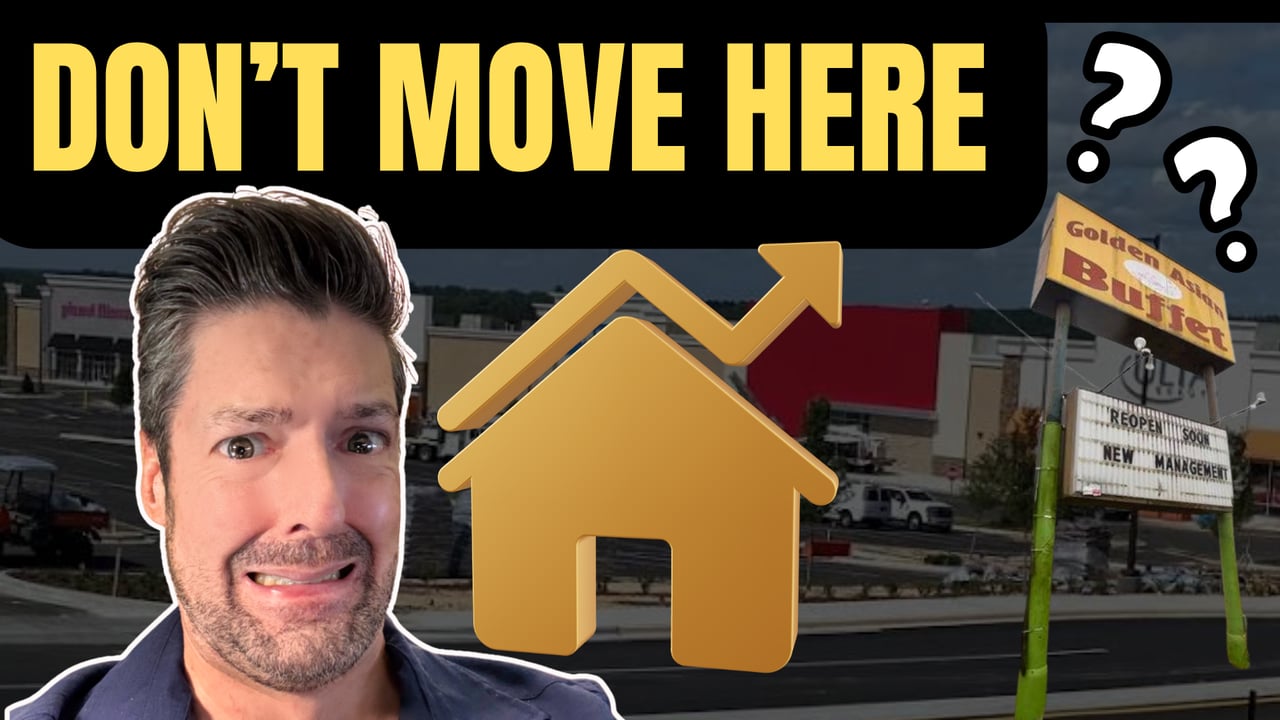
Drive out to State Road 85 near the interstate and you'll see what growth in Crestview is supposed to look like. Aldi, Ulta, Marshalls, Burlington, Planet Fitness, Five Below, Chili's. Several storefronts opened within weeks of each other when Crestview Commons finally delivered on years of promises, and the corridor has kept filling in since. It's the version of "Crestview is growing" that shows up in headlines and in the traffic on Ferdon Boulevard.
Three miles away on Main Street, growth looks nothing like that. A jewelry store gets an award. A boutique hosts mahjong night. An Italian restaurant opens in February and is still one of the best-reviewed tables in town by August. Nothing arrives six at a time downtown. And that's the part worth understanding, because it isn't an accident of smaller lots or slower permitting. It's the actual, documented pace the Main Street Crestview Association has been running for almost thirty years, and the state just confirmed it's working.
The Number Behind the Recognition
In January 2026, the Florida Department of State named the Main Street Crestview Association its Main Street Program of the Month, the kind of recognition that comes with a press release and a quote from the Secretary of State, not a ribbon-cutting. What made the designation interesting wasn't the honor itself. It was the math behind it.
MSCA joined Florida's Main Street Program in 1997. Since then, the organization has generated $16,282,408 in public and private investment downtown and helped create 163 net new businesses and 486 net new jobs. Spread that across 29 years and the picture changes. That's roughly $561,000 in reinvestment a year, about 17 new jobs a year, and one new business added to downtown Crestview every two months on average.
That's not a boom. It's a habit. And it explains why downtown never feels like it's having a moment the way the Commons corridor did in 2023, when six national retailers opened inside a single month. Main Street's growth doesn't spike. It accumulates, one storefront at a time, which is exactly why it took three decades to add up to a statewide award instead of a single flashy grand opening.
The Crestview Bulletin quoted Amy Koger, who had been MSCA's executive director for less than a year when the designation came through:
"It really makes the effort of our entire team all worthwhile. It's such an honor."
What "One at a Time" Looks Like Right Now
If you want to see the current installment of that 29-year pattern, you don't have to look far. A few of the businesses carrying it forward this year:
- Dolce Forno, an Italian restaurant that opened downtown this past February, built its reputation on sourcing ingredients directly from Italy rather than cutting corners on a strip-mall budget.
- Joey the Jeweler, the downtown shop owned by Forrest "Joey" Tinklepaugh Jr., who was named the city's 2026 recipient of the Mae Reatha Coleman Citizen of the Year Award, a recognition tied to his standing in the community, not just his storefront.
- Marigold + Mule Clothing Boutique, which has turned itself into more than a retail stop by hosting recurring Mahjong Nights for the neighborhood.
None of these would make a business journal's list of major openings. That's the point. They're the individual data points behind the $561,000-a-year average, and they're the reason Main Street's growth is legible only if you're paying attention to the storefronts themselves rather than the traffic counts on the highway.
The Friday Ritual That Makes the Math Visible
The clearest way to watch this pattern play out in real time is Food Truck Friday, MSCA's recurring event on Main Street every first Friday from March through October, five to ten in the evening, with food trucks, sidewalk vendors, and live music filling the block.
The next one on the calendar isn't a routine edition. On September 4, the city is running what it's billing as a "3 Day Weekend" version of Food Truck Friday, timed to the front end of Labor Day weekend, which gives residents an extra excuse to make a night of it downtown rather than just a quick stop between errands.
What makes the event worth building a routine around isn't novelty. It's that it happens on the same street, on the same schedule, in front of the same slowly growing set of storefronts, month after month. Food Truck Friday doesn't announce Main Street's investment the way a ribbon-cutting does. It just puts people in front of it on a predictable night, which over a few years does more to normalize a new restaurant or a new boutique than any single opening ever could.
Where the Reinvestment Actually Shows Up
Some of what that $16.28 million in cumulative investment pays for isn't a business at all. Over the past year, MSCA worked on improving accessibility at the downtown pocket playground, including installing an ADA-compliant swing set with accessible safety flooring, a small project aimed at making the play space usable for more kids in the neighborhood.
It's a useful contrast to the Commons corridor, where investment shows up as a big-box anchor and a new turn lane. Downtown, it shows up as a swing set. Both are real growth. They just look completely different, and confusing one for the other is how a resident ends up thinking downtown Crestview is standing still when it's actually been adding value in smaller, more personal increments for three decades.
The Rest of the Calendar
Food Truck Friday isn't the only fixed point on MSCA's yearly schedule, and knowing the full rhythm makes it easier to plan around. The Triple B Festival, a barbecue event, runs every March. Downtown Crestview's Fall Festival is set for October 31 this year. The Holiday Market follows in November, and the year closes with the Crestview Christmas Parade in December, which is the largest Christmas parade in Okaloosa County.
Taken together, that's a calendar built the same way the business growth is built: steady, recurring, and scaled to the size of the town rather than to the size of a press release. If the highway corridor is where Crestview announces itself, Main Street is where it keeps showing up, one Friday and one storefront at a time.
That's the piece of the story easy to miss if you only measure growth by what opens six at once. Downtown Crestview's version is slower and, so far, has thirty years of numbers behind it saying it holds up.
If you're already living in Crestview and you've noticed the slow shift downtown, it's worth knowing what it might mean for your own street, your own equity, and your own next move, whenever that is. Chris Closes tracks this kind of neighborhood-level change for a living. Reach out for a straight answer on what it means for your home, or grab a free valuation to see where you currently stand.