Thinking about a place in Seaside or along 30A and wondering whether an HOA or a condo association is the better fit? You are not alone. On the coast, the details behind ownership, dues, insurance, and rentals can shape both your lifestyle and your bottom line. In this guide, you will learn how HOAs and condo associations differ on 30A, what that means in Seaside, and the key steps to take before you buy. Let’s dive in.
What you own in each
Condominium ownership means you own your interior unit and share an undivided interest in the common elements, which can include the building exterior, roof, land, and amenities. The condominium association manages those shared elements based on the recorded declaration and plats. Your responsibilities are defined by that declaration.
HOA ownership usually means you own the land and the structure on it, such as a single‑family home or fee simple townhome. The HOA manages community common areas like roads, landscaping, parks, and amenities under recorded covenants, conditions, and restrictions.
In Seaside and nearby 30A communities, you will see both setups. Some properties are true condos. Others are single‑family homes or townhomes within an HOA that enforces design standards and community rules. Always confirm whether a property is a condo unit or a fee simple home in an HOA, since maintenance and insurance responsibilities can be very different.
How Florida governance works
Florida gives condo associations and HOAs different legal frameworks. Condominiums are governed primarily by Florida Statutes Chapter 718, while HOAs fall under Chapter 720. Both rely on recorded documents like declarations or CC&Rs, bylaws, and rules.
For you, this means there are set processes for budgets, meetings, voting, transparency, and record access. As a member, you can typically review financials, attend meetings, and elect the board. Those rights help you evaluate the community’s financial health and how it is managed.
Dues, reserves, and assessments
Regular assessments fund day‑to‑day operations. In condos, dues often cover building insurance, exterior maintenance, elevators, pools, landscaping, and management. Beachfront buildings may carry higher dues to cover complex systems and stronger insurance needs. In HOAs, dues tend to support common areas and amenities, not your individual home’s exterior.
Reserve funds pay for big‑ticket repairs and replacements over time. Think roofs, exterior painting, paving, elevator overhauls, and major mechanical systems. Review the most recent reserve study and current reserve balance. Underfunded reserves are a common reason for surprise special assessments.
Special assessments can be levied for capital projects or after storms. On the coast, large windstorm or hurricane deductibles can be allocated to owners through assessments. In a condo, these can relate to building‑level items like roofs or exterior repairs. In an HOA, they may cover roads, stormwater systems, or other shared infrastructure.
Lenders look closely at association health. For condos, many lenders require project questionnaires and may review owner‑occupancy ratios, the level of reserves, delinquencies, and any litigation. FHA and VA financing have project approval requirements that can affect your loan options. If you plan to finance, make sure the project meets your lender’s standards early in the process.
Who fixes what
In most condos, the association maintains the exterior structure, roof, building envelope, common mechanical systems, and shared grounds. This is why condo dues often feel higher, since more maintenance is centralized.
In HOAs, owners usually maintain their own home and lot, while the association handles shared areas. Townhomes can be either. Some townhome communities are deeded as condos, where the association maintains exteriors. Others are fee simple homes in an HOA, where owners handle the exterior. Always check the governing documents to confirm.
A quick rule of thumb: if the exterior is a common element in the declaration, the association likely handles it. If not, the owner likely does.
Insurance on the coast
In a condominium, the association typically carries a master property policy for the structure and common elements. You would carry an HO‑6 policy for your unit’s interior finishes and contents, plus liability. Ask for a clear summary of what the master policy covers and where your responsibility begins.
In an HOA, the association insures common areas. You insure your own home and improvements with an HO‑3 policy. In both setups, ask about windstorm and hurricane deductibles. Those deductibles can be large, and associations can pass them to owners through assessments after a storm.
Flood risk on 30A
Most 30A properties face some level of coastal flood exposure. Check FEMA flood maps for the property’s flood zone and ask whether there is an elevation certificate. Lenders usually require flood insurance in Special Flood Hazard Areas. For condos, confirm whether the association’s master policy includes flood coverage for common elements and whether you need a separate flood policy for your unit’s interior and contents.
Even if the property is outside a mapped high‑risk zone, consider a flood quote. Coastal weather is unpredictable, and flood coverage is purchased separately through the National Flood Insurance Program or private carriers.
Hurricanes and building standards
30A communities often adopt stricter architectural and structural standards due to wind and surge exposure. Elevation requirements, wind‑resistant construction, and shutters are common. When you review documents, ask about recent capital projects, wind mitigation improvements, and inspection reports following prior storms. These details can affect insurance pricing and future repairs.
Short‑term rentals on 30A
Short‑term rentals are common along 30A, but rules vary. Both condos and HOAs can set rental policies. You might see minimum rental terms, limits on how many times per year you can rent, registration with the association, extra fees, and occupancy rules. Some communities prohibit rentals altogether or require an owner‑occupancy period before renting.
Walton County and local communities may require registration, business tax receipts, health and safety steps, and the payment of tourist development taxes. If you plan to rent, confirm both the association rules and local requirements early. Ask whether there are caps on rental activity, waitlists, or additional fees.
Seaside example: what to confirm
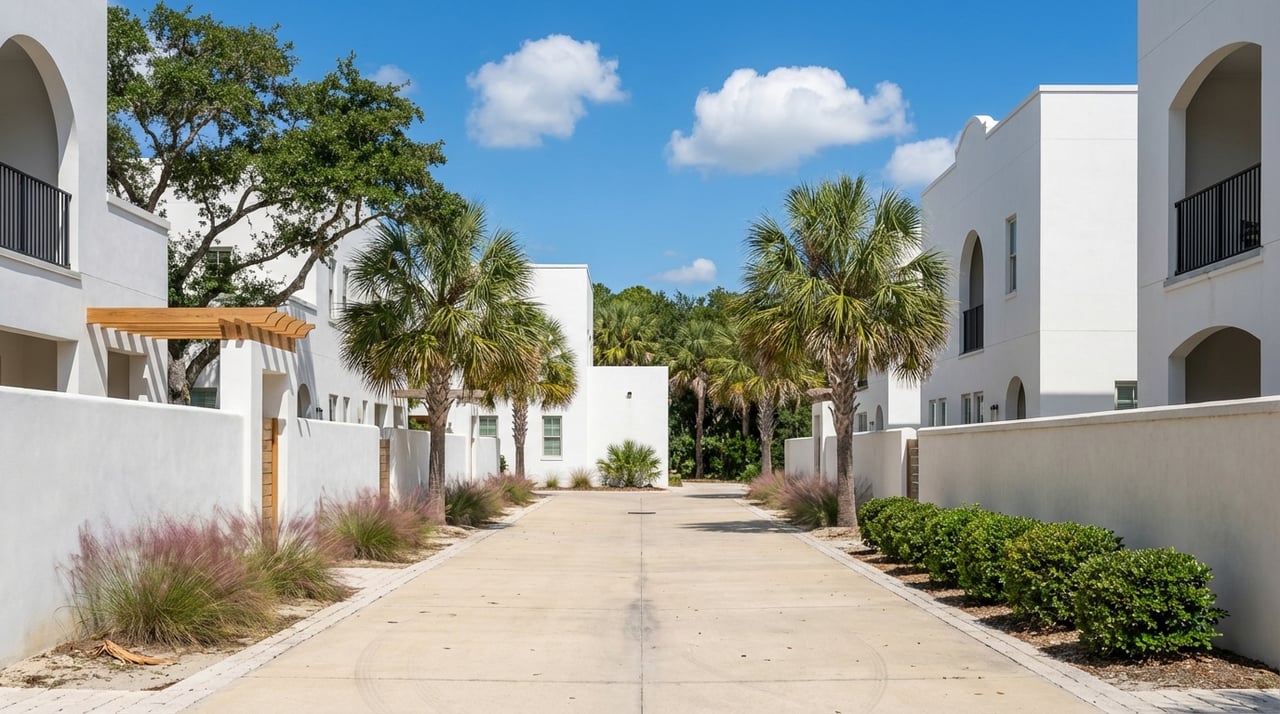
Seaside is a master‑planned community with design standards and active association oversight. Within Seaside, you will find different ownership types. Some properties are condominiums. Others are fee simple homes or townhomes within an association. Do not assume responsibilities are the same across the community.
When you evaluate a Seaside property, confirm the exact ownership type and the definition of the unit or lot in the recorded documents. That one step tells you who maintains the roof, whether windows and decks are owner or association responsibilities, and what insurance you need.
Buyer due diligence checklist
Use this checklist to compare options and de‑risk your purchase:
- Governing documents
- Recorded declaration or CC&Rs, plats, bylaws, and current rules
- Architectural guidelines and design standards
- Financials and reserves
- Most recent annual budget and year‑to‑date financials
- Latest reserve study and current reserve balances
- History of special assessments and stated reserve‑funding policy
- Delinquency levels, if available
- Meetings and litigation
- Board meeting minutes for the last 12 to 24 months
- Summary of any pending or threatened litigation, judgments, or liens
- Insurance
- Association master property, liability, and fidelity policies
- Clear summary of coverages and deductibles, including wind and hurricane
- For condos, a unit‑boundary exhibit and what is insured as a common element
- Assessments and fees
- Current dues, any unpaid assessments, and pending special assessments
- Transfer fees, capital contributions, and any rental‑related fees
- Estoppel letter or certificate of assessments
- Rentals and use
- Rental rules, minimum stay, caps, and any registration steps
- Local Walton County permitting and tourist tax requirements
- Parking, pet, and occupancy rules
- Property condition and risk
- Recent capital projects and inspection reports
- Roof, elevator, and structural reports if applicable
- Flood zone, elevation certificate, and any prior FEMA claims history if available
- Financing and lender requirements
- Lender’s condo questionnaire for condominium properties
- FHA or VA project approval status, if relevant to your loan
- Practical checks
- Utility arrangements and what dues include
- Parking and storage assignments
- Sample rental agreements if the association manages rentals
Real‑world cost examples to consider
Condo near the beach: Higher dues can include building insurance, exterior maintenance, elevators, pools, and reserves. You still carry HO‑6 and likely a separate flood policy for interiors and contents. After a storm, you could face a share of a large wind deductible through a special assessment.
Single‑family in an HOA: Lower dues may cover roads, landscaping, and amenities. You insure the house with an HO‑3 and carry flood coverage if required. You are responsible for your roof, exterior, and systems. Special assessments may arise for community infrastructure.
Townhome on 30A: The defining question is the deed. If it is a condominium townhouse, the association may handle exteriors. If it is fee simple in an HOA, you likely handle them. The recorded declaration will make it clear.
Smart steps before you buy
- Ask your agent whether the property is a condo, fee simple townhome in an HOA, or a single‑family home in an HOA.
- Request a sample document package before you write an offer, when possible.
- During escrow, obtain the full association disclosure package, budget, reserve study, minutes, insurance certificates, and estoppel.
- Get quotes for wind/hazard and flood insurance early. Confirm how deductibles could be assessed to owners after a storm.
- If you plan to rent, confirm association rules and local registration requirements at the same time you are lining up management.
- If you will finance, verify the project meets your lender’s criteria and review any condo questionnaire red flags.
- Consider consulting a local real estate attorney or community association specialist to interpret complex documents.
Work with a local advocate
You deserve clear answers on costs, rules, and risk before you commit to a 30A property. If you want a steady, hands‑on guide who knows how associations work along the Emerald Coast and how lenders and insurers view coastal projects, let’s connect. Reach out to Chris Schultz for a straightforward plan to compare HOA vs condo options in Seaside and across 30A.
FAQs
Who pays for the roof in Seaside and 30A communities?
- In condos, the association usually handles roof and exterior as common elements; in HOAs, owners typically handle their own exteriors unless documents say otherwise, so always check the declaration or CC&Rs.
Do I need flood insurance for a 30A property?
- If the property is in a Special Flood Hazard Area, lenders usually require it; even outside high‑risk zones, consider a flood policy due to coastal exposure and verify elevation information.
Can I rent short term in Seaside or Walton County?
- It depends on association rules and local requirements; confirm rental minimums, caps, registration steps, fees, and tourist tax obligations before you buy.
How do special assessments work after a hurricane?
- Associations can assess owners for large repairs or to cover wind or hurricane deductibles on the master policy, so review insurance summaries and deductible amounts.
How do condo dues compare to HOA dues on 30A?
- Condo dues are often higher because they include building insurance and exterior systems; HOA dues tend to focus on common areas while owners cover their own home’s exterior and insurance.
How do lenders view condos vs HOAs for financing?
- Lenders review condo projects for reserves, delinquencies, owner‑occupancy, and litigation; some loans require project approvals, so verify the project meets your lender’s standards early.