"The kind of place that charms at first sight." That's how the Michelin Guide described Roux 30A this spring, when the inspectors who write for the world's most recognized restaurant guide finally made it to Grayton Beach. The line reads like it could apply to half the cottages on Logan Lane. It happens to be about a thirty-four seat dining room tucked into the Art District, with communal tables, counter stools facing an open kitchen, and a six-course tasting menu that changes with whatever's fresh that week.
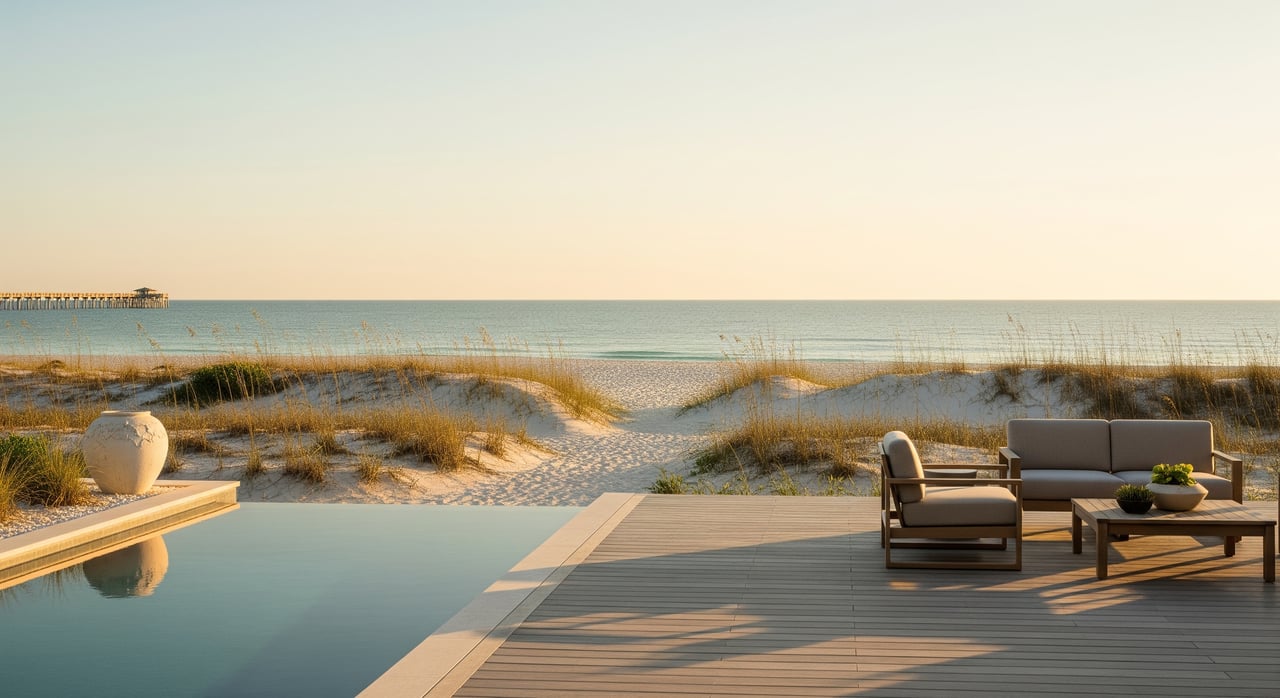
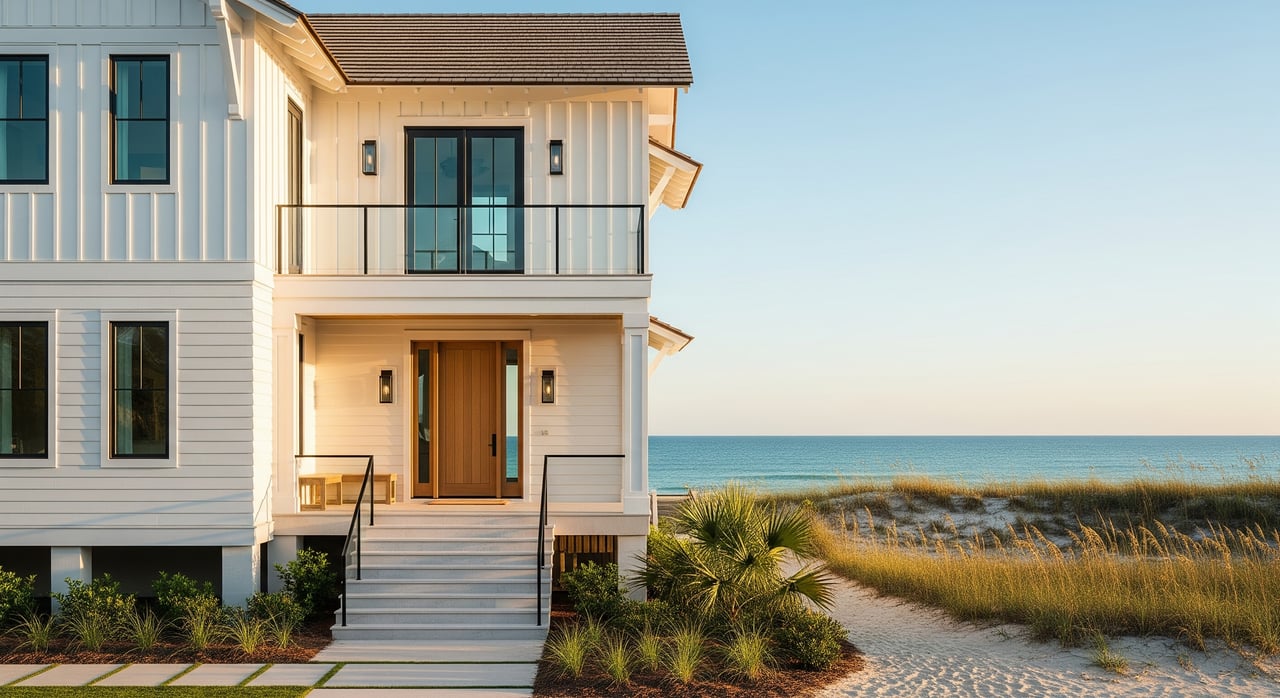
What makes the moment worth sitting with isn't the food. It's the math. Grayton Beach is a village where Census-based estimates keep landing in the low 200s, most converging around 220 to 228 year-round residents with a median age near 53. A national guide that only expanded to cover the entire state of Florida this year found its way to a town that size before it found plenty of places ten times larger. And in the same fifteen-day stretch of June, the county cut a ribbon on a brand new beach access here and the town's oldest sailing tradition ran its 29th race off the same sand. None of it changed how big Grayton Beach is. It changed how many people outside Walton County now have a reason to know its name.
A Plaque for a Restaurant That Was Already Full
Roux 30A wasn't a surprise opening chasing attention. It was already running a six-course tasting menu and booking through Resy well before May 2026, when Michelin released its first statewide Florida guide and included Roux among the Recommended tier alongside Seaside's Daytrader Tiki Bar and Miramar Beach's Evie Mae's BBQ. On June 30, the Walton County Board of Commissioners handed each restaurant a commemorative plaque at a public meeting, the kind of ceremony that turns a dining review into a hometown moment.
Chef Nikhil Abuvala runs both Roux 30A and The Daytrader, which means one chef picked up two of the county's three nods in the same guide cycle. His reaction, quoted by county tourism staff, called the recognition one of the most meaningful moments of his career, and it's easy to see why. The Michelin Guide is one of the most closely watched dining authorities in the world, and this was the first year it looked at Florida as a whole state rather than a handful of cities. Roux's space seats up to 34 guests and can convert to a standing cocktail event for more, which tells you something about scale even at the level of the room. The restaurant that just earned international attention has never tried to be large. It works the room it has.
A Beach Access Named for One Neighbor
Two weeks before the Michelin plaques went up, Walton County held a 9 a.m. ribbon cutting on Hotz Avenue for the Bets "Beachmama" Haynes Regional Beach Access, the county's 11th regional access point. It's a modest piece of public infrastructure by any measure, a walkway and parking area at 44 Hotz Avenue, but it's the kind of investment that only makes sense in a place small enough that a named beach access still functions like a landmark rather than a line item. The Walton County Tourism press office covered the June 15 ceremony alongside the same summer's Michelin news, treating both as evidence of the same thing: a place getting more attention without getting more crowded in any structural sense.
Access here has always run through scarcity rather than expansion. Much of the shoreline in Walton County is privately held, and Grayton Beach is the only spot in the region where residents can drive a vehicle directly onto the sand, something the county manages through an annual lottery capped at 150 one-year permits. A new public access point adds a door. It doesn't add a beach.
The Regatta That Still Runs on a Joke From 1981
Twelve days after the ribbon cutting and three days before the county handed out its dining plaques, Grayton Beach ran its 29th annual Rags to Riches Regatta on June 27. The race is unmistakably local business. It started as a rivalry between two ends of the same short stretch of coast, with Grayton's crowd jokingly calling themselves the "rags" and their neighbors down the beach in Seagrove the "riches." Nearly three decades later, teams of two still launch 16-foot Hobie Cats straight off the sand, sail roughly three miles east to a buoy near Seagrove, and turn back for a finish line drawn in the same spot. The official regatta site still frames it as "a day of salt, sun, and unapologetic tradition," and the Captain's Party the night before is held at Chiringo, the same beachside spot that's anchored Grayton nightlife since 2016.
Entry runs $45 a boat, and every dollar goes to the South Walton Artificial Reef Association, which uses the money to fund artificial reef projects in the same Gulf waters the sailors race across. It is not a spectator event dressed up with sponsors and a stage. It is a fundraiser that happens to look like a party, run by the same handful of local businesses and volunteers who've run it since the Reagan administration.
What the Attention Actually Lands On
Line these three weeks up and the pattern isn't growth. It's density of recognition. A restaurant seating 34 people got a global food guide's attention. A beach access serving one neighborhood got a county ribbon cutting. A sailing race with a $45 buy-in kept its 29th consecutive audience showing up on the same stretch of sand where it started. Each of these things is small enough that a single named person, a single named restaurant, a single named nonprofit can be the whole story.
That density shows up elsewhere too. Inside the Shops of Grayton and Uptown Grayton, the same cluster of businesses that's anchored the village for years, Nanbu Noodle Bar, Black Bear Bread Co., Saczynski Gallery, and The Shard Shop, still sit within a few doors of each other. SHACKS, a multi-level artist co-op, opened in 2024 and became the newest addition to a gallery scene that's operated on roughly the same footprint since before most of 30A had paved roads. Red Bar rebuilt after a fire in February 2019 and came back as the same room with the same jazz sets, not a bigger version of itself. Growth here doesn't look like more square footage. It looks like the same small set of addresses getting better at what they already do, then getting noticed for it.
The Same Village, With Better Documentation
None of this changes what Grayton Beach is. It's still the unincorporated village founded in 1890 by William Miller and William Wilson, still bordered on three sides by a state park that keeps it from ever sprawling, still operating under the unofficial motto "Nice Dogs, Strange People" that residents have worn as a badge for longer than most of the businesses on this list have existed. What changed this year is documentation. A Michelin inspector wrote down what a lot of regulars already knew about a small tasting room in the Art District. A county commission put a name on a beach access that locals were already calling by a nickname. A sailing club kept a tally that's now three decades deep.
If you already live near this stretch of 30A, none of that is a reason to do anything differently this fall. The Thursday market at Hibiscus still runs the same two-and-a-half hours it always has. AJ's still books the same kind of live music on Wednesday nights it's booked for years. The recognition landed on top of a routine, not instead of one.
If you're the kind of person who tracks this pocket of the coast anyway, whether that's what opened, what got a plaque, or what race still fills the same short stretch of sand every June, Chris Closes keeps an eye on the same details for the same reason you do. Reach out if there's a Grayton Beach story you think deserves a closer look before it shows up everywhere else.